

As a professional dog walker and trainer, one of the questions I get asked regularly is:
“Why don’t you use slip leads?”
It’s a fair question. Slip leads are common in the dog world. They’re quick to put on, easy to carry and often used by trainers, walkers, kennels, and rescue organisations. But after years of working with dogs of all breeds, sizes, ages and temperaments, I made the decision not to use them in my day-to-day handling — and here’s why.
What Is a Slip Lead?
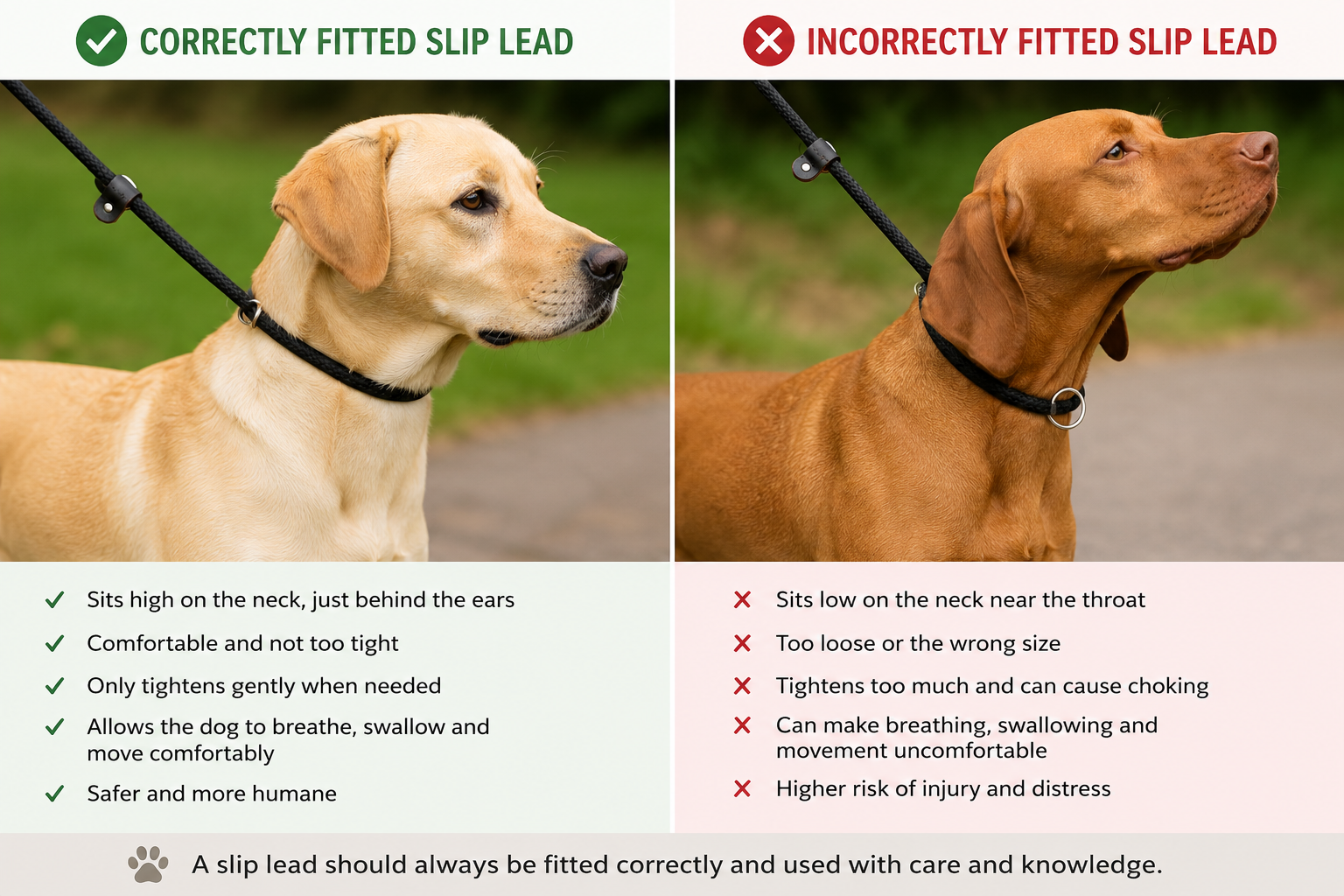
A slip lead combines a lead and collar into one piece. It tightens when pressure is applied and loosens when pressure is released. While they can be useful in emergency situations or for temporary handling, they rely heavily on timing, skill and the individual dog’s behaviour.
In the wrong hands — or even simply during an unexpected moment — they can create unnecessary stress and risk.
Safety Comes First
My biggest priority is always the safety and wellbeing of the dogs in my care.
Slip leads tighten around a dog’s neck when they pull, lunge, panic or suddenly move. Even gentle dogs can react unpredictably if startled by another dog, traffic, loud noises or squirrels! Because the pressure is concentrated around the neck and throat, there is potential for discomfort or injury.
For me, that’s not a risk worth taking when there are safer alternatives available.
Dogs Learn Best When They Feel Secure
I believe dogs thrive when they feel calm, supported and safe.
Many dogs, especially nervous, rescue, adolescent or sensitive dogs, can find pressure around the neck intimidating or stressful. Over time, this can affect confidence, walking behaviour and trust.
I prefer equipment that encourages comfort and communication rather than control through painful pressure.
I Prefer Harnesses and Properly Fitted Headcollars
For walks, I use secure, well-fitted equipment chosen specifically for each dog’s needs.
A properly fitted harness can:
- Reduce strain on the neck and throat
- Offer better support and security
- Help dogs move more naturally
- Provide safer handling for nervous or excitable dogs
A properly fitted headcollar can:
- Provide gentle control
- Control pulling without harsh correction
Combined with positive reinforcement, patience and consistency, either of these options can provide a much more enjoyable walking experience for both the dog and the handler.

Every Dog Is an Individual
There’s no ‘one-size-fits-all’ approach in dog care.
Some professionals use slip leads responsibly and effectively, particularly in controlled environments or specialist settings. This post isn’t about criticising others. It’s simply about explaining the standards and handling choices I personally make in my business.
The dogs in my care are treated as individuals, and my approach is always based on trust, safety and a happy dog first.
Building Trust Over Control
At the heart of everything I do is relationship-based care.
I want dogs to enjoy being with me. I want walks to feel enriching, calm and positive, not restrictive or stressful. That means choosing handling methods that prioritise comfort, communication and confidence-building wherever possible.
For me, avoiding slip leads is part of that commitment.
If you’d like to know more about the equipment I recommend or the approach I use with the dogs in my care, feel free to get in touch.

Add comment
Comments