

Do you love your dog but feel like you're constantly repeating yourself without anything changing?
Perhaps your dog pulls on the lead, ignores recall, jumps up at visitors or simply struggles to focus when there are distractions around. You know what you want them to do, but finding the time, consistency and confidence to get there can feel overwhelming.
That's exactly why I created the Take & Train Kickstart service.
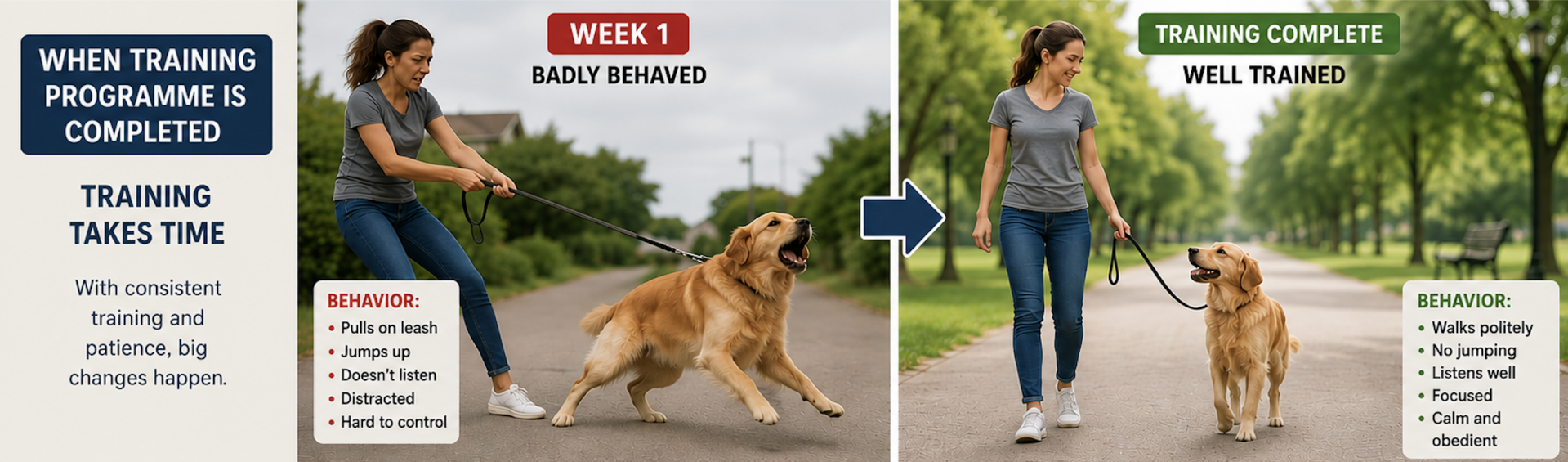
The ‘Lightbulb Moment Usually Comes Later
By around session four, something often changes.
Dogs begin to understand what’s expected of them. Owners become more confident and consistent. Communication improves.
Suddenly:
- Recall starts becoming more reliable
- Loose lead walking improves
- Focus increases around distractions
- Problem behaviours begin reducing
- Dogs settle more quickly
- Owners feel more in control
This is the point where all the repetition and practice starts paying off.
Many people who stop after one or two sessions leave just before the breakthrough happens.
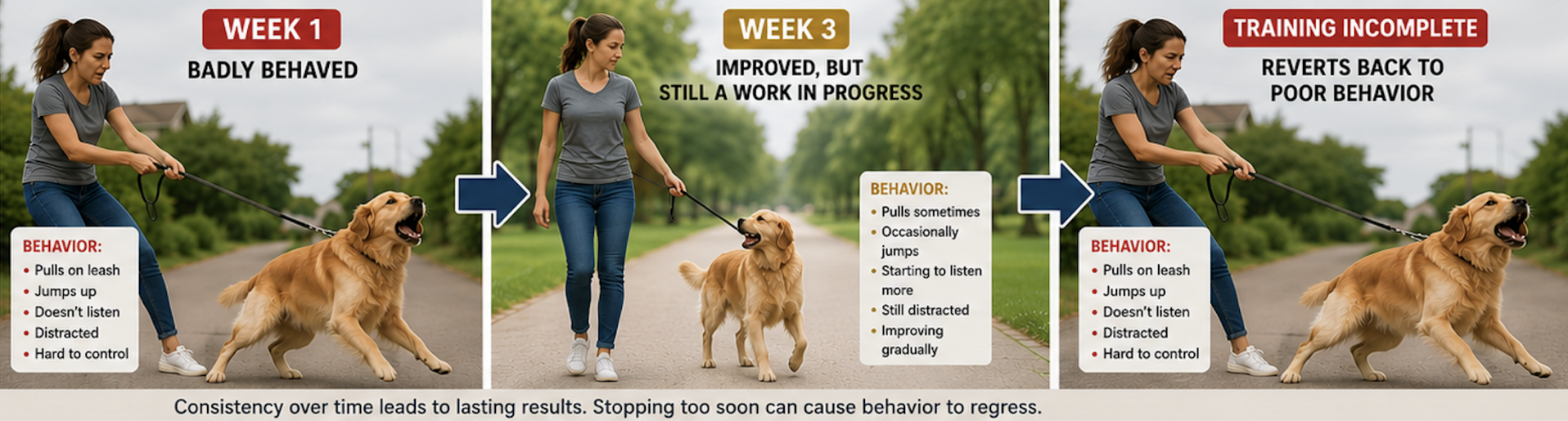
Training Is About Habits, Not Quick Fixes
Just like humans, dogs learn through repetition and routine.
Completing the full training programme gives your dog the opportunity to:
- Practice skills in different situations
- Build confidence gradually
- Strengthen positive habits
- Learn self-control around distractions
- Develop long-term reliability
Consistency over several weeks creates lasting behaviour change. A single session can introduce a skill — but repetition is what makes it stick.
Owners Need Training Too
Dog training isn’t only for dogs.
A huge part of success comes from owners learning:
- Timing
- Consistency
- Body language
- Reward placement
- Reading canine behaviour
- Managing situations calmly
By continuing through the programme, owners gain confidence and develop the skills needed to maintain progress long after classes finish.
Every Dog Learns at Their Own Pace
Some dogs pick things up quickly. Others need more time to process and practice. That doesn’t mean training isn’t working.
Comparing progress between dogs can sometimes lead owners to feel discouraged early on, but steady improvement is far more important than instant perfection.
The goal isn’t a perfectly trained dog after one session — it’s a well-adjusted, responsive dog for life.
The Dogs Who Stay the Course Usually Make the Biggest Progress
The most successful dogs are rarely the ones who start perfectly.
They’re the ones whose owners:
- Keep showing up
- Stay patient
- Practice consistently
- Trust the process
Training is an investment in your relationship with your dog, and the benefits continue long after the programme ends.
So, if progress feels slow in the beginning, don’t worry — that’s often exactly how real learning starts.
More often than not, the breakthroughs happen just after the point where people were tempted to give up.
Add comment
Comments