

The Sled-Dog Struggle: How to Stop the Pulling and Reclaim Your Daily Walks
We’ve all been there. You lace up your trainers, grab the lead and go out the door with visions of a peaceful, breezy stroll. Your dog sits nicely while you clip on the lead.
But the moment your feet hit the pavement? BAM.
Suddenly, your arm is yanked out of its socket. You’re being dragged down the pavement at top speed. Your dog is panting, choking and leaning into the lead like an Alaskan Husky training for a race.
If you’re tired of your dog taking you for a walk, you aren’t alone. Lead pulling is one of the most common complaints among dog owners. Fortunately, you don’t have to accept the daily arm workout. With the right strategy and plenty of patience, you can master the art of the loose-lead walk.
Why Do Dogs Pull in the First Place?
Before we fix the problem, let’s understand it. Your dog isn't pulling to dominate you or be a "bad boy." They pull for three simple reasons:
- They walk faster than us: A human’s natural walking pace is a slow crawl to a dog. They naturally want to cruise ahead.
- The world is exciting: Pavement, grass, lampposts and other dogs are a smorgasbord of exciting smells and sights. They just want to get to the "good stuff" faster.
- Opposition reflex: This is a physical instinct. When a dog feels tension pulling them backward, their natural reflex is to lean forward and push against that pressure.
Knowing this, how do we turn things around? Here is your step-by-step game plan for stress-free strolls.
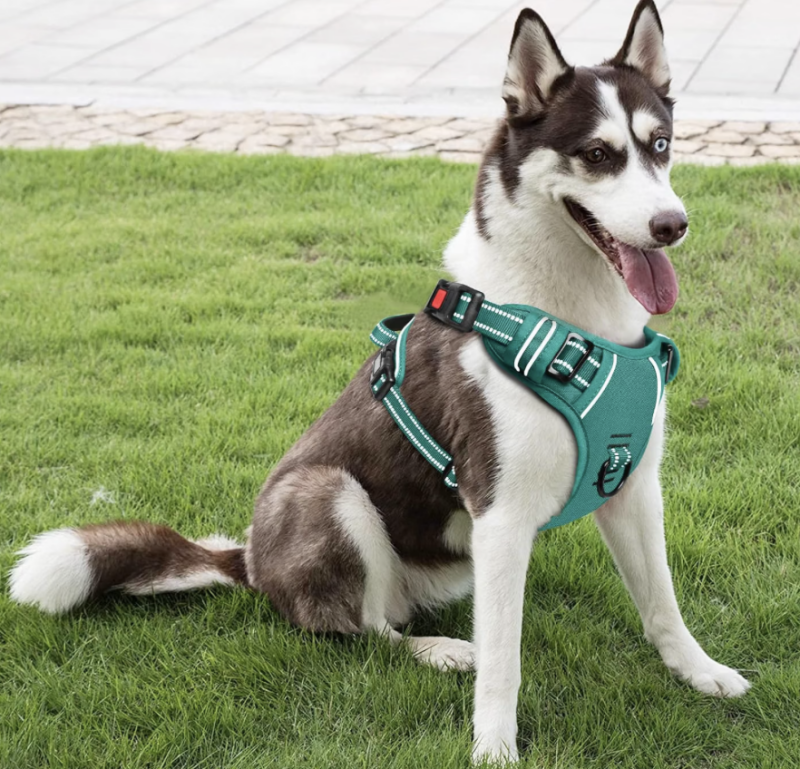
- Change the Collar for a harness
If your dog is a heavy puller, clipping a standard lead to a flat collar is a recipe for neck injury and constant coughing.
Instead, invest in a front and top clip harness. Unlike back-clip harnesses (which actually trigger that opposition reflex and make pulling easier), a front-clip harness attaches the leash right at your dog's chest. When they try to lunge or pull ahead, the harness gently steers their body back toward you, taking away their forward momentum safely.
- Become a "Tree"
The golden rule of loose-lead training is simple: Pulling gets you nowhere.
The next time your dog tightens the lead, stop dead in your tracks. Become a tree. Do not let them drag you even an inch forward. Wait silently until your dog looks back at you or takes a step backward to put slack in the line. The moment the lead goes loose, mark, reward and resume walking.
This teaches your dog that a tight lead is a red light, and a loose lead is a green light.
- Reward the "Zone of Awesome"
Don't just correct the bad behaviour; heavily reward the good. The space right next to your left or right leg is the "Zone of Awesome."
Bring a pouch of high-value treats—think tiny pieces of chicken, cheese or hot dogs. While you are walking, if your dog is walking nicely by your side and looking up at you, feed them a treat every few steps. Eventually, they will realise that hanging out right next to you is the most rewarding place to be.
- Burning Energy Before the Walk
Trying to train a dog who has been cooped up inside for eight hours is a losing battle. They have too much explosive energy.
Before you practice walking, try burning off that initial burst of adrenaline. Play a quick 10-minute game of fetch in the garden, do a quick tug-of-war session or let them figure out a puzzle toy. A slightly tired dog is a much more focused student.
Progress Takes Time
Teaching a dog not to pull isn’t a one-day fix. It’s a muscle-memory game that requires consistency from everyone in your household. If you let them pull on Thursday, they won't understand why they can't pull on Friday.
Be patient, pack plenty of treats and celebrate the small victories—like a solid two minutes of a perfectly slack lead. Your shoulders will thank you!
If you think you’ve tried everything and nothing’s worked, contact me and let’s find a way to make walks fun and safe for you and your dog.
Add comment
Comments